Poles Tighten Their Budgets, Saving for Safety Rather Than Pleasure

Polish households are growing increasingly cautious with their money, choosing to save not for holidays or new purchases, but to protect themselves from financial shocks. A recent national study shows that for most people, saving is no longer about planning for the future but about surviving the present.

The vast majority of Poles now view their savings as a form of protection. Three out of four respondents said they put money aside mainly to cover emergencies such as unexpected expenses or the risk of losing their job. Experts note that this has been the dominant saving pattern since 2022, reflecting years of economic uncertainty, high inflation, and rising living costs.

What’s more, a large share of people are no longer able to keep their savings untouched. Nearly one in three adults admitted that in the past six months they had to dip into their own reserves simply to cover basic needs. Food, rent, and electricity bills are the main reasons households have been forced to draw from funds that were originally meant to provide financial security.

Financial analysts see this as a worrying sign. While Poles remain disciplined savers by European standards, inflation continues to erode their purchasing power. The result is a form of “forced saving,” where money set aside for peace of mind is increasingly used to fill the gaps in monthly budgets. Many families describe their savings not as a cushion for future goals, but as a temporary shield against current pressures.

Still, some goals remain intact. Around one in six Poles continue to save for retirement, while another small share sets money aside for health-related costs or leisure activities. But the ability to save for pleasure is becoming more fragile. Spending on holidays, for instance, has turned into a luxury that many are quick to postpone when finances tighten. The average household trip budget this year hovered around 4,400 złoty—an amount that, for many, requires months of planning and sacrifice.

According to researchers, these changing patterns show both prudence and strain. On one hand, Polish households have developed a culture of financial responsibility and a strong instinct to prepare for uncertainty. On the other, the continued pressure of everyday costs means that even this responsibility has limits. When food and rent consume most of the income, savings become a tool of necessity rather than long-term planning.

Experts warn that unless real wages begin to rise faster than prices, many families will struggle to rebuild their financial buffers. For now, saving in Poland has become less about comfort or growth, and more about resilience — a strategy for coping with an economy where every unexpected bill can upend a fragile balance.

Source: BIK

Fitch Maintains Luxembourg’s Top Credit Rating Amid Modest Growth Outlook

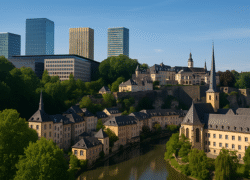
Luxembourg has once again secured its position among the world’s most creditworthy nations. Fitch Ratings reaffirmed the country’s top-tier ‘AAA’ sovereign rating with a stable outlook, citing strong public finances, prudent governance, and resilient financial institutions as key pillars of stability.

According to Fitch, the Grand Duchy continues to benefit from one of the highest income levels in Europe and a solid fiscal position underpinned by low government debt and significant financial reserves. These strengths, the agency noted, offset challenges linked to the small size of the economy and its sensitivity to broader global and regional shifts.

Economic activity, however, has cooled more sharply than previously expected. Growth in 2025 is projected at around 1.2 percent, down from earlier estimates, as weaker eurozone demand and soft labour market dynamics weigh on performance. A gradual recovery is anticipated from 2026 onwards, supported by easing monetary conditions, automatic wage adjustments, and planned government spending.

The country’s public debt ratio remains exceptionally low, standing near 26 percent of GDP, one of the lowest among advanced economies. Even with modest fiscal deficits expected over the next few years, Fitch foresees the debt burden staying below 30 percent of GDP before declining again toward the end of the decade.

Luxembourg’s pension system—a frequent topic in fiscal discussions—has undergone reform aimed at shoring up long-term sustainability. Adjustments to contribution rates and retirement eligibility are expected to extend the life of existing reserves, which currently amount to about one-third of the national economy’s output.

The financial sector, which plays an outsized role in Luxembourg’s economy, remains on firm ground despite recent volatility in real estate and global markets. Banks retain strong capital and liquidity buffers, and profitability continues to exceed pre-pandemic levels. The investment fund industry, one of the largest in Europe, has also proven resilient amid changing interest rate and market conditions.

Governance and institutional quality continue to rank among the highest globally, contributing to the country’s reputation for political stability, rule of law, and effective public administration—factors that reinforce investor confidence and underpin its enduring top credit rating.

Fitch cautioned that Luxembourg’s outlook could face pressure in the event of a severe international downturn or a major shock to its financial system, but such risks are considered limited. With solid fiscal management and a healthy economic framework, Luxembourg remains firmly positioned within the small circle of nations holding the highest possible credit standing.

Source: Fitch Ratings

Crestyl completes Semerínka residential project in Prague

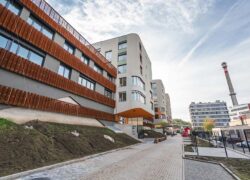
Crestyl successfully completed the Semerínka residential project in Prague ahead of schedule. The project, located in Prague’s Radlice district, comprises four blocks of varying heights, offering 185 apartments with views of Prague and greenery. The development features a community garden, family-friendly facilities, and easy access to public transport and nature. The total investment in the project reached CZK 1.5 billion.

Viktor Peška, Commercial Director of Crestyl Group, highlighted the completion of the project as a significant milestone for future residents. The project was built all at once to minimize disruptions, creating a peaceful living environment with proximity to the city center and nature. Only a third of the apartments remain available due to high demand.

Designed by David Chmelař’s architectural studio, Semerínka’s apartments feature high-quality materials, functional design, and modern technologies. The development includes well-designed facilities and courtyards to enhance community life. Residents can enjoy amenities such as a community room, reception desk, and ample parking in underground garages.

The project is conveniently located near metro stations and the Semmering railway stop, providing easy access to the city center. The surrounding area offers a mix of natural landscapes, including meadows, trees, and pastures, for residents to explore and enjoy outdoor activities. Additional amenities in the area, such as schools, swimming pools, sports facilities, and tennis courts, complement the residential offerings at Semerínka.

Building Certainty in an Uncertain Market: CIJ EUROPE Interviews David Evans, Managing Director of OPTIM Project Management

From crisis-era beginnings to a 100-plus-strong multidisciplinary team, OPTIM Project Management has evolved into one of Southeast Europe’s most respected independent consultancies. Managing Director David Evans speaks with CIJ EUROPE about early-stage risk, sustainable design, digital adoption, and the lessons learned from delivering complex projects across Romania and the wider SEE region.

OPTIM Project Management was founded in 2009, at the height of the global financial crisis. Evans had been leading the construction of the now-iconic Euro Tower on Bucharest’s Barbu Văcărescu Boulevard when the project’s original management withdrew. “I did a deal, kept the team together, and that’s how OPTIM was born,” he recalls. The company’s early portfolio revolved around retail schemes for NEPI and hypermarket operator Cora. A request from Cora in 2013 to handle both design and construction pushed OPTIM to establish its own architectural and MEP design arms. Today the Romanian office houses about 85 specialists spanning design, cost management, and project management, supported by associated operations in Bulgaria, Serbia, and Croatia. Across the region, the firm  has been involved in high-profile projects such as the Marriott hotel within Sofia’s I Tower, factories for Continental Automotive, and a major Epic Games campus in Novi Sad. In Croatia, OPTIM is currently completing a new Google head office, secured through repeat collaboration with the client’s Romanian division.

Managing Risk by Strengthening the Start

David identifies one consistent cause of cost and schedule overruns: poor front-end definition. “Too many projects are pushed forward on incomplete designs and underestimated permitting constraints. Once shaky assumptions get locked into contracts, every decision becomes reactive.” In the SEE market, the rush for early permitting to secure financing often forces design coordination to run in parallel—or start only after the building permit is issued. The result, he says, is predictable: rework, change orders, and cost drift. OPTIM’s approach is to slow down at the start, front-loading feasibility, utility checks, and stakeholder alignment before tender. “Strong beginnings are the best risk management. If you de-risk the start, you can move faster later,” David Evans insists. Studies show that more than 70 percent of project overruns originate from deficiencies in early planning rather than execution.

Many investors still view advisory services as optional, but David disagrees. “Project management isn’t an overhead—it’s a framework that secures performance and governance.” OPTIM translates technical foresight into measurable metrics such as cost-deviation reduction, fewer variation orders, and greater schedule certainty. “The question isn’t what does it cost to engage advisors, but what is the cost of not having them?” he says. Early engagement, he argues, routinely saves months and millions by identifying risks that might otherwise crystallize mid-construction.

Sustainability and Digitalisation Redefining Value

Sustainability has shifted from compliance to competitiveness. With nZEB standards now mandatory in Romania, even mid-range developments must integrate energy-efficient systems. “Among international developers, BREEAM, LEED, WELL, and strong digital connectivity are now baked into financing and leasing strategies,” says David. He points to OPTIM’s design for Hospice Casa Speranței in southern Bucharest, a palliative-care NGO facility that will use photovoltaics and ground-loop heating and cooling. “We’re targeting a 75 percent reduction in monthly utilities. For a non-profit relying on donations, that’s transformational.” Still, he notes that some local projects remain driven by short-term budgets. “Our job is to show that sustainability isn’t a cost but a value driver. A WELL-ready office leases faster and retains tenants longer; a BREEAM-certified logistics park gets better financing.”

Digital tools are also changing how OPTIM delivers. The company designs to BIM Level 300–400, uses AI-assisted concept modelling, and manages construction through cloud-based platforms such as DALUX, enabling real-time control of quality, cost, and programme. “Every drawing revision, RFI, and material change sits in one place. By completion we can generate accurate as-builts automatically,” says David. The main bottleneck now, he believes, is not technology but integration. “Information still lives in silos between design, construction, and operations. Many owners don’t yet use BIM data for maintenance or life-cycle management. Larger institutional clients do—but the rest of the market is catching up.”

OPTIM’s hotel portfolio continues to expand, yet David highlights: “Developers often underestimate what it costs to meet a brand’s technical and operational standards. Operators like Marriott or IHG guide you, but they don’t fund you.” His solution is early joint workshops with both operator and developer. “For a small fee, we test-fit the land, assess key counts, lay out facilities, and give a concept-level budget. It avoids sticker shock later.” Increasingly, banks require LEED or BREEAM certification as a loan condition—another push toward higher-quality delivery.

Climate volatility is now influencing engineering decisions. “Codes tell you to design for certain rainfall intensities, but storms now exceed them. We’ve seen three months of rain in four hours,” says David. Over-designing doubles cost; under-designing risks flooding. “It’s a constant balance between resilience and affordability.” Rising temperatures also drive up cooling loads, reinforcing the importance of envelope and systems design.

Adapting to a Changing Market

Working across four countries means navigating four sets of bureaucracy. “The laws aren’t the issue—it’s how they’re interpreted,” David explains. “A permit can take three months in one place and nine in another.” OPTIM mitigates this through flexible scheduling, dependency mapping, and a standardised tender and evaluation framework. Labour shortages, he adds, are a regional reality. “Workers from Asia often stay six months then move on to Western Europe. We pre-qualify contractors on labour strength and build conservative schedules.”

Looking ahead, OPTIM is expanding carefully into select public-works projects such as municipal offices and fire stations, while avoiding heavy infrastructure. The firm also performs general contracting on smaller assignments and continues to strengthen its in-house design and construction-management capabilities. “We’re not chasing airports or megahospitals,” David says. “Our strength lies in integrated design and delivery across Southeast Europe—staying close to clients, getting in early, and finishing with certainty.”

After sixteen years and hundreds of projects, David Evans’s philosophy remains straightforward: “If we’re in the room at the start—testing assumptions, aligning stakeholders, setting a data-driven plan—projects finish faster, cleaner, and with fewer surprises.” In an industry still defined by volatility, OPTIM Project Management’s steady focus on clarity, sustainability, and disciplined execution continues to make it one of the most reliable names in SEE construction management.

© 2025 cij.world

North Bucharest Investments CEO Vlad Musteata on Record Sales, VAT Impact, and the Rise of the Buy-to-Let Market in Bucharest

CIJ EUROPE sat down with Vlad Musteata, CEO of North Bucharest Investments (NBI), to discuss the company’s record-breaking year, the impact of VAT changes, the growing buy-to-let segment, and what lies ahead for Bucharest’s residential market.

Q: North Bucharest Investments has reported record transaction volumes in 2025. How do these compare with official ANCPI figures, and what is the breakdown between new builds, resales, and typical unit sizes in North Bucharest?

Vlad Musteata: It has been a remarkable year, though not without challenges. The spring elections slowed investor decisions for a few months, but by mid-year we saw renewed activity, especially in Pipera. July was extraordinary due to the announced VAT changes. In just ten days, our legal and notary teams worked late into the night to finalise contracts, as buyers rushed to secure deals before 1 August.

Roughly 80–85% of our transactions are apartments in Pipera, priced between €90,000 and €150,000. Another 10–15% are higher-value units in areas like Fabrica de Glucoză, ranging from €150,000 to €250,000. Since September, we’ve also closed several deals in the €400,000–€1 million range, showing a renewed trust from larger investors.

Q: July saw a spike in sales linked to the VAT change. How much of this demand was policy-driven, and do you expect momentum to continue?

Musteata: Policy clearly played a big role. Many families who had been considering purchases for one or two years acted immediately, often making decisions within a week. By August, much of the inventory below €120,000 had disappeared. Since then, demand has shifted slightly toward larger, more expensive apartments in the €140,000–€150,000 range. July alone brought nearly 190 transactions for us, an exceptional result.

Even after the VAT-driven rush subsided, we noticed that the sense of urgency remained. Buyers are now more aware of how fiscal policy can influence timing, and that’s led to faster decision-making overall. The market has matured—clients are better informed, and financing institutions have become more agile in processing requests.

Q: NBI has also launched a rental division. How is the buy-to-let segment performing in terms of yields and demand?

Musteata: Investor demand for rentals is strong, especially in Floreasca and Fabrica de Glucoză. Many prefer to hold properties long-term, confident they will appreciate significantly over the next five years. Our rental management service emerged naturally from client requests—we assist with furnishing, tenant sourcing, and aftercare.

Current yields are in the 7–8% range, but the real attraction is capital appreciation. In northern Bucharest, values have been rising around 15% annually, which is unique in Europe right now. Tenants are typically young entrepreneurs reinvesting in their businesses, top managers from multinational companies, and foreign professionals starting operations in Romania.

What’s interesting is that the rental market is becoming more structured and transparent. Investors now expect professional management, digital contracts, and consistent reporting. At NBI, we use digital tools to monitor occupancy, yield performance, and maintenance, giving clients real-time visibility on their assets

Q: Younger generations in Europe often prefer renting to ownership. Are you seeing this trend in Bucharest?

Musteata: Absolutely. Younger people—especially those in their twenties and thirties—are financially better educated than previous generations. Many prefer flexibility, choosing to rent while focusing their resources on business or personal growth. For property owners, this is positive, as demand for quality rental apartments continues to grow.

We’re also seeing lifestyle-driven choices. Younger professionals value location, amenities, and interior design more than ownership status. This shift is gradually pushing developers to create more mixed-use projects with community spaces, co-working areas, and green zones—something we actively promote to our partners.

Q: Compared to other cities in the region, how do you see Bucharest’s pricing and opportunities?

Musteata: If you compare with markets like Chișinău, where new builds in good areas are already priced at €5,000–€7,000 per square metre, Bucharest still offers opportunities. Current prices in areas like Pipera and Floreasca are far lower than what the fundamentals suggest. In my view, over the next two years many of today’s opportunities will disappear as supply remains limited and construction costs rise.

Bucharest also benefits from a unique mix of local and foreign capital, which creates liquidity and resilience. Compared to Central Europe, our market still offers better value per square metrerelative to average income. That gap will likely narrow as Romania continues to attract multinational employers and high-skilled professionals.

Q: Looking ahead, what is your outlook for the Bucharest residential market over the next three years, and how is NBI positioning itself?

Musteata: I expect residential prices in Bucharest to grow by around 20% per year over the next three years, driven by limited supply and steady demand. The biggest risk is the low number of new permits being issued, which could further restrict supply.

At NBI, our goal is to raise standards in brokerage by providing transparency, legal due diligence, and after-sales support. We see ourselves not just as brokers, but as long-term partners—helping clients with rental management, resale strategies, and ensuring they benefit from appreciation in the years to come.

Q: Finally, what is your biggest concern at the moment?

Musteata: My only real worry is the slowdown in new residential projects. If the pipeline of permits doesn’t improve, prices will rise quickly, reducing affordability and limiting options for buyers. That said, Bucharest still has strong fundamentals, and we remain optimistic about the market’s growth trajectory.

I would also mention the importance of sustainable urban planning. A strong and active partnership between developers and local authorities—focused on transport, green areas, and utilities—is essential to ensure balanced urban growth. At NBI, we advocate for a long-term vision where residential expansion goes hand in hand with infrastructure and quality of life.

© 2025 cij.world

 

REDPORT Development Targets Institutional Growth as Vitality Project Gains Momentum

REDPORT Development is deepening its position in Bucharest’s residential market while setting its sights on becoming a fully fledged institutional housing platform in the coming years. Following the completion of its first private placement earlier this year, the developer is preparing a second round before year-end to broaden its shareholder base and prepare for a potential stock-exchange listing between 2027 and 2028, possibly in Bucharest and on a secondary European exchange.

Chief Operating Officer Bogdan Gubandru describes the capital-raising programme as the foundation for a long-term urban-transformation strategy. “Every euro we’ve attracted is being invested into land and community infrastructure,” he said. “Projects such as The Level, Infinity Nord and Vitality EST demonstrate our goal of developing landmarks that will shape Bucharest’s urban experience for decades.”

A Growing Residential Pipeline

REDPORT’s current flagship, Vitality, is a €50 million scheme in Sector 3 of Bucharest. Construction began in July 2025 with an initial 145 low-rise apartments. Once complete, the project will deliver roughly 500 units across three phases, including mid-rise buildings with park and lake views. Apartments are marketed from around €1,800 per sq m, with one-bedroom homes starting near €100,000.

The financing structure follows the company’s typical formula—about 60 percent bank debt, 20 percent shareholder equity, and 20 percent presales. These early sales provide liquidity while also demonstrating demand to lenders. Operationally, REDPORT maintains cost control through its in-house general contractor and long-term subcontractor relationships. Partnerships such as its collaboration with Mobexpert for custom furniture packages reflect a broader effort to align product design with buyer expectations.

Preparing for an Institutional Future

As REDPORT moves toward an eventual public listing, management’s aim is to evolve from a developer into a platform capable of attracting long-term institutional capital—including pension funds and family offices. Gubandru notes that this requires transparency, strong governance, and consistent delivery. “By 2027 we want REDPORT to be acknowledged not just as a developer, but as a platform for urban transformation,” he said. “That means delivering over 2,000 units, meeting IFRS standards, and maintaining resilience across cycles.”

He adds that institutional investors seek the same qualities that once drew capital to modernise great cities: “Discipline, transparency and long-term vision. Our ambition is to curate the city’s future—offering varied housing for a diverse customer base, from mid-market to premium buyers, in Bucharest’s most dynamic districts.”

Market Conditions and Affordability

With units at Vitality priced around €1,800 per sq m, REDPORT positions the scheme as accessible for middle-income, dual-earner families. The location—close to green areas, public transport and three lakes—offers features typically associated with higher-end districts. Gubandru acknowledges that rising interest rates remain a risk but stresses that phased construction and strong presales safeguard financial flexibility. “We’re determined that Bucharest’s next stage of urban growth remains broadly accessible, not exclusive,” he said.

Ambitious Pipeline Beyond Vitality

The company’s wider pipeline includes Infinity Nord, a major urban regeneration project described as one of the most ambitious in Bucharest in more than three decades. Alongside the Level residential brand, the combined portfolio exceeds €400 million in development value. Each project integrates housing with green space, education and lifestyle amenities. “It’s about more than buildings—it’s about stitching together communities,” Gubandru explained.

While REDPORT’s expansion plan remains in an early phase, its strategy—anchored in disciplined financing, in-house execution and investor diversification—signals its intention to become one of Romania’s emerging institutional-grade residential players.

© 2025 cij.world

Hagag Development Europe Expands Mixed-Use Portfolio with H Herăstrău Park Acquisition and Sustainability Upgrade

In mid-April 2025, real estate investor and developer Hagag Development Europe entered into a new strategic partnership with Niro Investment Group, the owner of Corinthia Grand Hotel du Boulevard and Bucharest Grand Hotel, acquiring a 50% stake in a mixed-use property located near Herăstrău Park, at 23–25 Ghețarilor Street. The deal, valued at €5 million, was structured based on the building’s annual rental income, expected yield, and current market conditions. Under the terms of the agreement, Hagag also assumed exclusive operational and management responsibilities for the entire property.

As of November 1, the building—formerly the Unicredit headquarters—officially re-entered the commercial market under the developer’s new brand identity: H Herăstrău Park. The move marks another step in Hagag’s broader strategy to grow its portfolio of mixed-use assets in Bucharest while revitalising existing stock to modern standards.

With a gross built area of approximately 10,000 square metres (including 6,800 sq m of leasable retail and office space and around 100 parking spaces), H Herăstrău Park is undergoing a targeted light refurbishment aimed at improving energy performance and overall sustainability.

“The building was originally delivered in 2005, so our approach focuses on retrofitting rather than rebuilding,” explained Andreea Dumitru, Chief Marketing Officer at Hagag Development Europe, in an interview with CIJ EUROPE. “Retrofitting existing buildings is a vital strategy for decarbonising the built environment and achieving net-zero targets. H Herăstrău Park is being renewed and upgraded to deliver higher energy efficiency and a reduced carbon footprint.”

The property’s façade—composed of roughly 30% ventilated ceramic panels and 70% curtain wall glass—has been largely preserved, requiring only selective replacement of damaged tiles, glass, seals, and gaskets. The mechanical, electrical, and plumbing systems have been fully replaced with Class A standard installations. Although Hagag is not primarily focused on formal certifications, Dumitru confirmed that the company is considering green certification and photovoltaic panel installation to further optimise operational efficiency.

While the current partnership with Niro Investment Group covers only the 50% stake acquired this year, Hagag has no plans to buy out the remaining share. Instead, the developer is concentrating on the building’s repositioning and lease-up to strengthen its income profile within the company’s expanding commercial division.

Beyond this project, Hagag’s broader development strategy remains consistent: to enhance mixed-use functionality across its Bucharest portfolio. “All our projects—whether residential or commercial—include complementary functions,” Dumitru said. “Examples such as H Victoriei 109, H Tudor Arghezi 21, and H Victoriei 139 feature retail components, while H Pipera Lake, H East Residence, and H Știrbei Palace integrate hospitality, retail, and lifestyle elements.”

Although the company is not currently seeking new acquisitions, it continues to hold a land bank for future development. Dumitru noted that Hagag’s focus remains on “high-value repositioning” of central and semi-central Bucharest properties that can be revitalised into modern, sustainable assets.

Through projects like H Herăstrău Park, Hagag Development Europe is positioning itself as a key player in Bucharest’s next stage of urban regeneration, combining investment with sustainability-driven refurbishment. The company’s growing portfolio reflects a long-term vision to transform underutilised buildings into dynamic mixed-use environments aligned with international ESG trends—reinforcing Bucharest’s evolving status as a competitive and livable European capital.

© 2025 cij.world

Studium Green Sold 157,000 sqm of Land to Altex and mömax

Studium Green, a Cluj-Napoca-based company specializing in real estate developments, owned by entrepreneur Dorin Bob, has completed the sale of some land in the Jilava locality to the Altex group and the furniture and decoration retailer mömax. The land will be integrated into a larger lot owned by the Altex group, which will form the basis for the development of the largest retail park in southern Bucharest. The total value of the transactions carried out by Studium Green with the Altex and mömax groups is over EUR 17 million.

Studium Green remains part of the project for the development of the future commercial park, where it will develop HoReCa facilities. Also, across the road from the future park, Dorin Bob owns a 23,000 sq m plot of land, for which possible complementary facilities are currently being analyzed.

Studium Green was assisted in the transaction with the Altex group by the Reff & Asociații | Deloitte Legal.

Colliers Appointed Exclusive Consultant for the Sale of Haier’s Factory

Colliers has been appointed exclusive consultant for the sale of Haier Tech Europe’s factory on the outskirts of Ploiești, Prahova County. Colliers’ mandate covers representing Haier’s interests in identifying potential buyers or end-users from the manufacturing sector.

The Haier Romania plant sits on a 130,000 sqm site, with a built area of 58,000 sqm and is located in the Ariceștii Rahtivani industrial area, less than one hour from Bucharest’s northern ring road, with fast access to the main road infrastructure and to the Port of Constanța.

“The Haier factory offers high standards of quality, efficiency, sustainability and modularity, making it attractive both to strategic investors and to companies seeking a fully operational production facility with modern infrastructure and room to expand. To date, the Romanian market has not seen a production unit that combines this impressive scale with such a high standard of quality and immediate availability. We are honoured by this mandate and enthusiastic about the opportunity to unlock the project’s potential, contributing to the development of the Ploiești, Prahova and Aricești communities. We intend to approach this assignment with flexibility and professionalism, aiming to structure a balanced transaction that benefits all parties involved – the seller, future occupiers and local residents”, says Lucian Opris, Head of Special Projects | Office, Industrial & Logistics at Colliers.

CGA Home Consulting takes over the exclusive sales mandate for HORIZON CITY

CGA Home Consulting announces the acquisition of exclusive sales rights for the HORIZON CITY residential project. This decision marks a consolidation of the partnership between the team led by Cătălin Apetri and British investor Ghai Sant Ram. The project is located in the northern area of Bucharest and has already reached a sales level of over 90 percent.

“We are honored to once again take on the exclusive responsibility for sales of a major project in the North of Bucharest. HORIZON CITY is a development with a long-term vision and our role is to bring it closer to clients who want greater comfort and superior home quality. The experience gained in selling Ivory Residence allows us to provide relevant consultancy and deliver fast results for this new ambitious project. Continuing the partnership with British investor Ghai Sant Ram is proof that performance and reliability are recognized,” says Cătălin Apetri, CEO and Founder of CGA Home Consulting.

The HORIZON CITY is being built on a land plot of nearly 23,000 square meters and represents a EUR 130-million  investment.

LATEST NEWS